Commercial kitchen exhaust systems are absolutely crucial in food service facilities. The real reason they’re so important is that they pull out the nasty stuff that gets generated when you’re cooking food heat, smoke, grease vapour, all that kind of thing. In Australia, if you’ve got a poorly designed exhaust system you’re looking at a real fire hazard, you’ll be burning more energy than you need to, and to top it all off you’ll be in breach of building regulations. For businesses looking to establish a new kitchen or upgrade an existing one, it’s vital to get your head around the installation process. Any project that includes commercial exhaust installation Riverina and other parts of Australia should take into consideration local council stipulations, climatic conditions, and individual construction features.
Getting to Grips with System Design Requirements
Designing the system is where the rubber meets the road when it comes to how a commercial kitchen exhaust system is going to perform in real life. The very first thing to consider is the type of cooking gear you’re using. For example, if you’re running high-powered gear like char broilers, wok burners or deep fryers, you’re going to need to have a more powerful system because they produce loads of grease vapour. The airflow rate needs to be worked out carefully.
The Australian Standard AS 1668.2 sets clear guidelines for ventilation needs in commercial kitchens. In most cases, you’re looking at airflow rates between 1,500 and 8,000 cubic metres per hour depending on how intense the cooking is and the size of your hood. Research has shown that if you get the airflow rates wrong, you can end up with systems that are either not capturing all the contaminants they should be, or they’re gobbling up loads of energy through being oversized.
The kitchen layout also plays a big role in how the system is designed. Where are you placing your equipment? How high is your ceiling? How big is the roof space? What kind of makeup air requirements do you have? All of these factors need to be taken into account before you even start building the system out. More often than not, early-stage engineering evaluations spot airflow issues that would have otherwise taken down the whole system.
Choosing the Right Hood for Your Kitchen
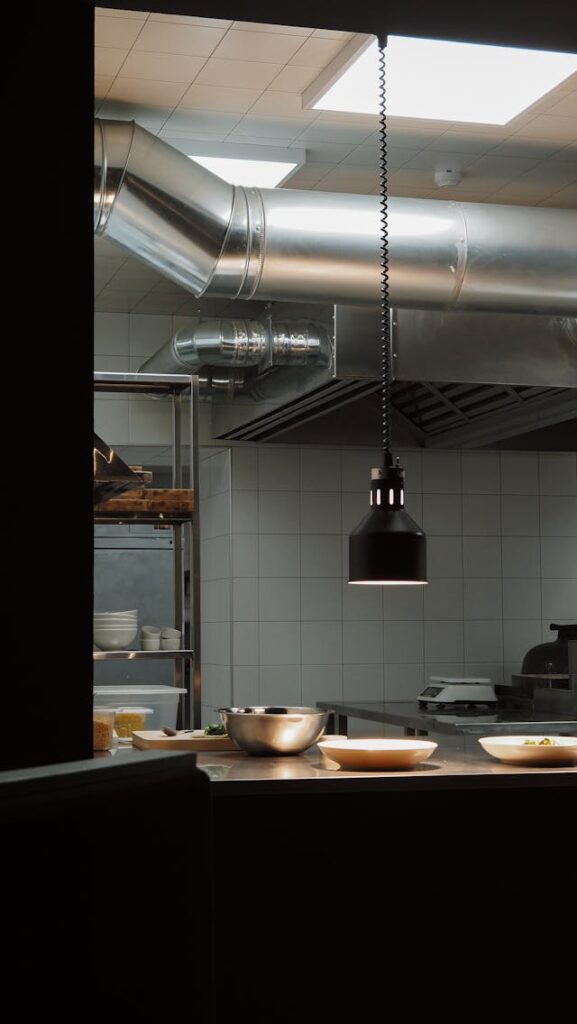
The hood is where all the smoke, grease and heat get collected. Commercial kitchens tend to use canopy hoods, island hoods or proximity hoods depending on how your cooking gear is laid out. Canopy hoods are easily the most popular choice because they can cover loads of cooking gear.
Studies done by ventilation manufacturers have shown that if you get the sizing of your hood right, it can capture more than 90% of the contaminants. Australian regulations pretty much dictate that hoods should be able to extend beyond your cooking gear so that they can pick up on any smoke that might escape. Grease filters are also super important. Baffle filters can catch loads of particles before they get into the ductwork.
Duct Design and Installation Considerations
Ductwork is basically the link between the hood and the exhaust fan. However, if it’s not up to scratch then you’re going to have issues with airflow, fire safety, and energy efficiency. Australian standards state that when working with grease laden air, your ducts need to be made from fire-resistant materials and you need to have some sort of access panel so you can clean the system.
Research has consistently shown that if you’ve got too many bends in the duct or it’s too long, you’re going to end up with reduced airflow. Therefore, designers generally try to keep the duct runs as short as possible while still being mindful of structural constraints.
Fire Safety & Compliance Requirements
Fire safety in commercial kitchen exhaust installations is a minefield of regulations and for good reason. Fire risks around oil, fat and open flames are just plain worse than everywhere else. And because of that, you need special safety measures to counter that.
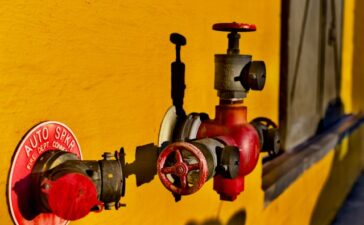
In Australia, building rules and fire safety standards pretty much demand that you’ve got a fire suppression system in place when you’re dealing with commercial cooking. Typically, that usually means automatic wet chemical suppression systems installed under the kitchen hoods to snuff out grease fires before they get out of hand. We’ve got data showing that these auto suppression systems are a game-changer in reducing property damage and lost business when a fire does go down.
Clearances from any flammable materials, fire-rated ducts when you need them, emergency shutoffs, and regular checks all have to be part of your compliance line-up. Otherwise, don’t meet those requirements though, and you’re looking at trouble government action, insurance headaches, and higher operational risks.
Inspection, Testing & Long Term Performance
Just because the build’s finished, doesn’t mean the job’s done. You need to do some serious testing and commissioning to prove the airflow is working, pressure levels are right, fans are spinning, and the whole system is working as planned. You compare airflow against the design specs to make sure you’re compliant and running smoothly.
But it doesn’t end there. You’re going to need to keep checking in on it regularly. Industry maintenance usually suggests you clean it at intervals based on cooking volume and grease production.
Regular checks are key to spotting any issues before they turn into compliance problems, energy waste, or safety worries. Monitoring and maintenance, therefore, are absolute essentials if you want to keep your commercial kitchen exhaust system up and running smoothly.