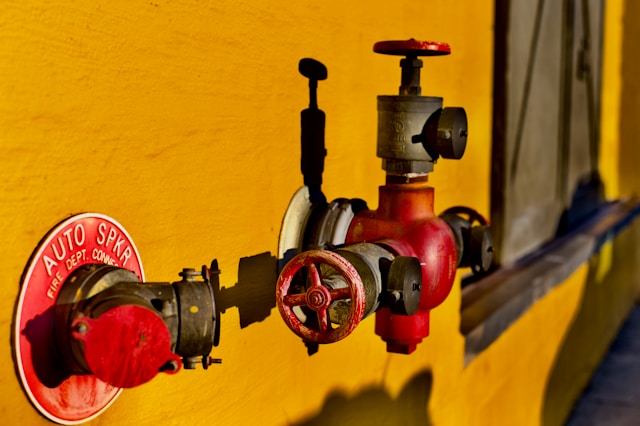
There’s a widespread, and somewhat annoyingly persistent, myth that turning on one sprinkler head and I mean literally turning it on, not necessarily starting a fire is going to flood the whole of the building. We’ve all seen this type of scene in films and TV shows, but unfortunately it bears no resemblance to how real fire sprinkler system installations actually work. In reality, each sprinkler head operates independently, responding only to the heat in the immediate area right next to it. No central switch, no domino effect. The head nearest the fire goes off and that’s it. The ones two metres away stay right where they are. Understanding this is important because it changes the way people who own buildings, rent them out or look after them on a day to day basis view not only how the system works but also their responsibilities in keeping it in working order.
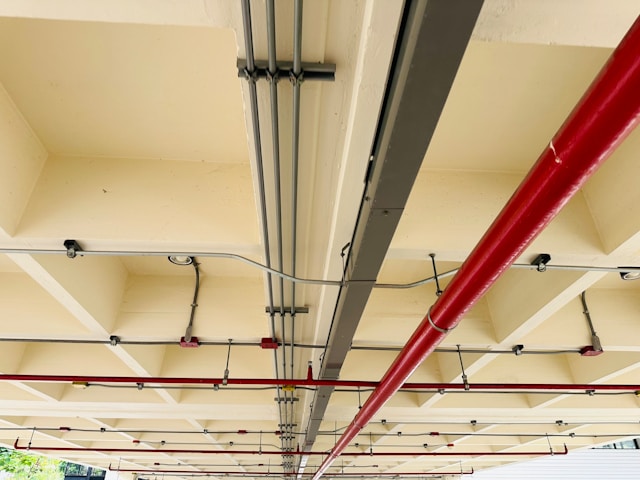
How Does A Sprinkler Head Actually Turn On?
Well, inside every sprinkler head you’ll find either a glass bulb or a fusible link these things stop the water from coming out. The glass bulb is filled with a liquid like glycerin which expands when the air gets hot. When the temperature that it’s sitting in reaches its set point, the bulb shatters, the seal lets go and the water starts flowing through that particular head. Most commercial and residential systems operate in a temperature range of between 68°C and 93°C, but actual rating can vary.
When a sprinkler head goes off, the water coming out is supposed to help control the fire in the immediate area, cooling things down, cutting off the oxygen and slowing the flames down. It’s not designed to put out a fire across the whole building at the same time that’s not what it’s for. People are supposed to get out and the emergency services turn up while the system does its thing.
Wet pipe systems, the most common type you’ll find in Aussie buildings, have pressurised water flowing through them all the time. As soon as a head gets triggered the water comes out and that’s it.
Why We Design Systems Around Water Density, Not How Much Water You’ve Got?
There’s a common assumption that a bigger sprinkler system means you’ve got more heads and therefore more water, but that’s just not how it works. What we actually do is work out what sort of fire hazard is in the space whether it’s a storage room with pallets of flammable goods, a high risk retail space or a hospital ward and design the system around that.
The thing is water density isn’t exactly how much water you’ve got per square metre, but rather how many litres per minute it delivers. The people designing the system do hydraulic calculations to figure out how many heads you need to deliver that in a given area when the fire first starts popping up. So a storage warehouse is going to have the heads spaced closer together, and bigger pipes and more water coming out than an office space. The National Construction Code sorts all this out, with specific rules depending on what sort of building it is. In Australia the Australian Building Codes Board is the ones who make these rules and keep things in order.
The NCC says that for Class 2 residential apartment buildings over a certain height you need to have a fire sprinkler system, and the new code has brought in new rules that affect all sorts of new developments across different types of buildings.
Maintenance Obligations According to AS1851
AS1851 spells out exactly what needs to go on in terms of maintaining fire sprinkler systems in Aussie commercial buildings. It lays out the rules for inspections and testing that need to happen at least once every quarter, six months, and a year. Depending on the interval, you’ll be checking different parts of the system.
Quarterly inspections take a close look at things like control valves, the water supply indicators, and the pressure gauges. And about every six months, you need to inspect the sprinkler heads themselves for any sign of corrosion, paint building up, or any physical obstacles. Each year you do a full flow test and make sure the alarm is working right. And each time you do an inspection, you’re supposed to write down the results and keep it on file that’s basically a legal document that proves you’ve done the right thing in terms of keeping the building up to code. Which is to say that if you do an inspection but you don’t document the results, it’s just like it never happened you won’t get the protection you’d get if you had done the documentation properly.
So when a problem shows up outside of the regular schedule say during a routine check every six months the building owner is the one who has to fix it right away, not just wait for the next scheduled visit. It makes no difference whether you found the problem at a six month check or the annual one you’ve still got to take care of it.
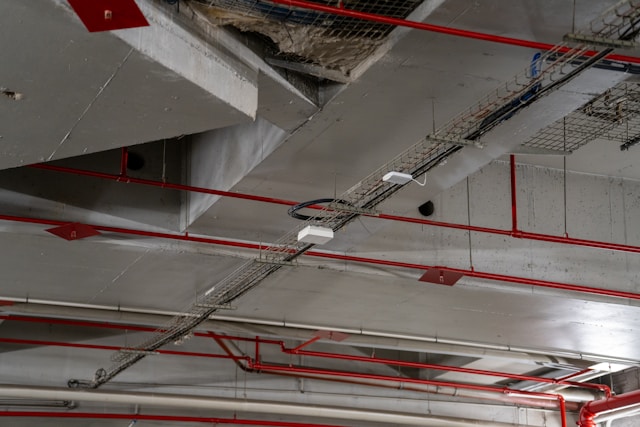
Common Pitfalls That Will Knock Your Fire System Off
One of the most common, and most serious, mistakes you can make in building maintenance is painting over your sprinkler heads. Now you might think that’s just a minor cosmetic thing, but it’s actually a big deal because when you paint a head, you’re insulating the little mechanism inside that’s supposed to respond to heat. That means it will take longer to activate than it should, and if you paint them all up, it might not work at all when it’s supposed to. You basically just ended up raising the temperature at which it activates and also delaying the response of the sprinkler head when it’s actually needed.
And don’t even get me started on storing stuff alongside the ceiling and obstructing the sprinkler spray pattern. AS1851 says you’ve got to make sure you’ve got enough clearance between your stock and the sprinkler heads, and if you don’t, you’re going to compromise the whole system. This is especially a problem in warehouses, where stock is constantly being moved around.
Then there’s the issues that come up when you make changes to a building’s layout, like installing a new ceiling or moving a partition wall, without updating the sprinkler system. These changes can leave gaps in the coverage, so you’re basically leaving your building more vulnerable to fire. And finally, assuming the original contractors who installed your sprinkler system are still responsible for keeping it up to speed is just plain wrong. Installation and maintenance are separate things, and if you don’t have a current service agreement with a contractor, you’re on your own when it comes to keeping your system up to code.